[01]
Reading deep time
A preloader thermal field, a split-type headline and a living shader behind the wordmark. The menu opens on a flood of Klein blue.
Next.js · WebGL · GSAPBranding. Interactive website. Motion. Merchandise.
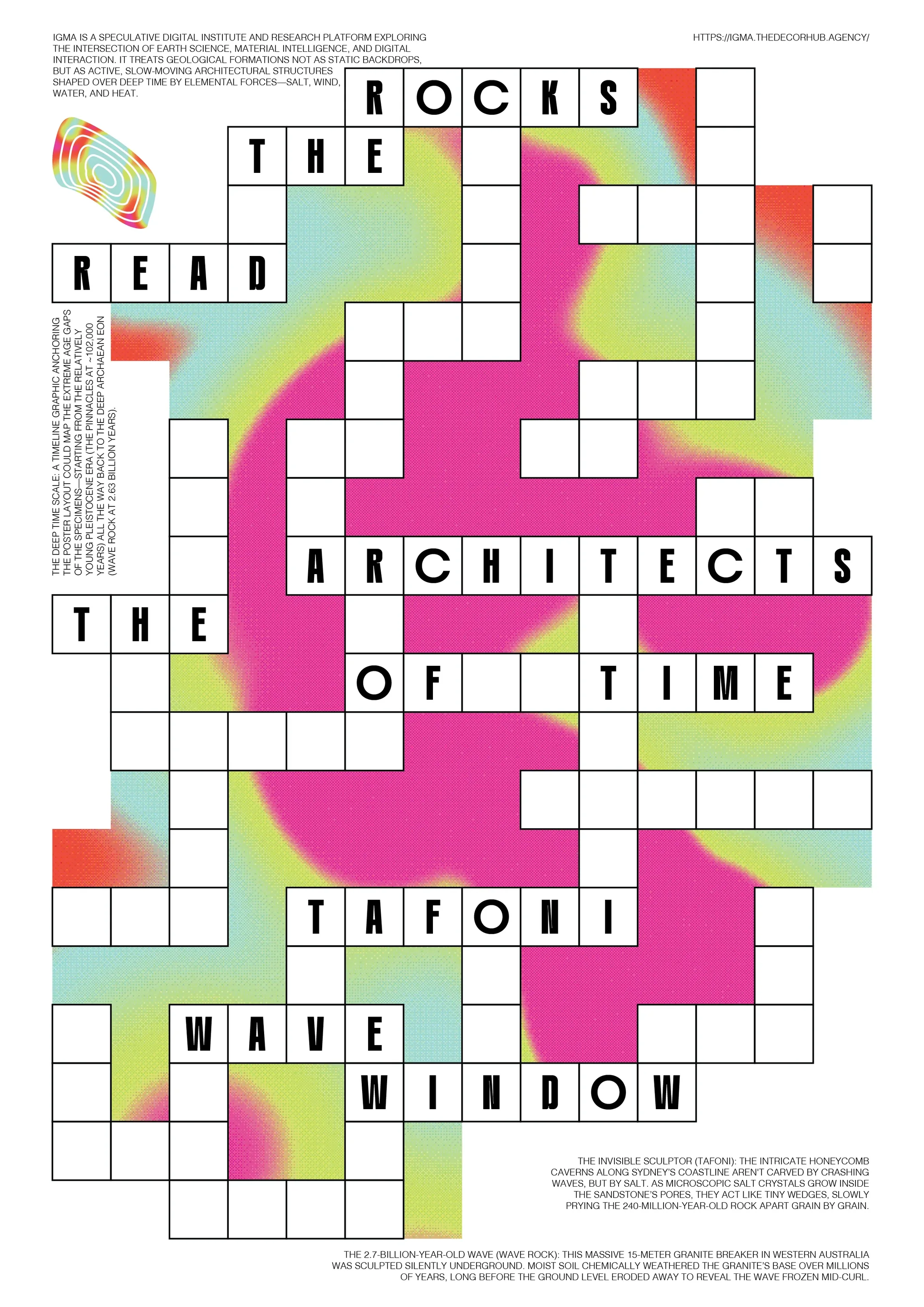
IGMA is a speculative science and digital-arts institute that studies the architecture rock builds for itself, starting with the honeycomb tafoni of the Sydney coast. We built its identity from a section cut through a single cavity, and a website that lets you scan, slice, heat and erode the stone in real time.
You are
the weather.
Move the cursor and the rock erodes. The whole site is one argument: deep time is easier to feel than to read. Every section is an instrument, not a page.
A preloader thermal field, a split-type headline and a living shader behind the wordmark. The menu opens on a flood of Klein blue.
Next.js · WebGL · GSAPA real-time 3D cavity of Sydney sandstone. Scroll moves a clipping plane through its core; the cursor heats and weathers the surface.
Three.js · custom GLSLNine field sites in one typographic index. A photo trails the cursor on lagging springs while the row floods with colour.
GSAP quickTo · ScrollTriggerA pinned timeline where the thermal field erodes as you move, from −250,000 to the present.
Pinned scrub · canvasA physics arcade on the same procedural rock generator as the research pages. Learning disguised as play.
Three.js · physics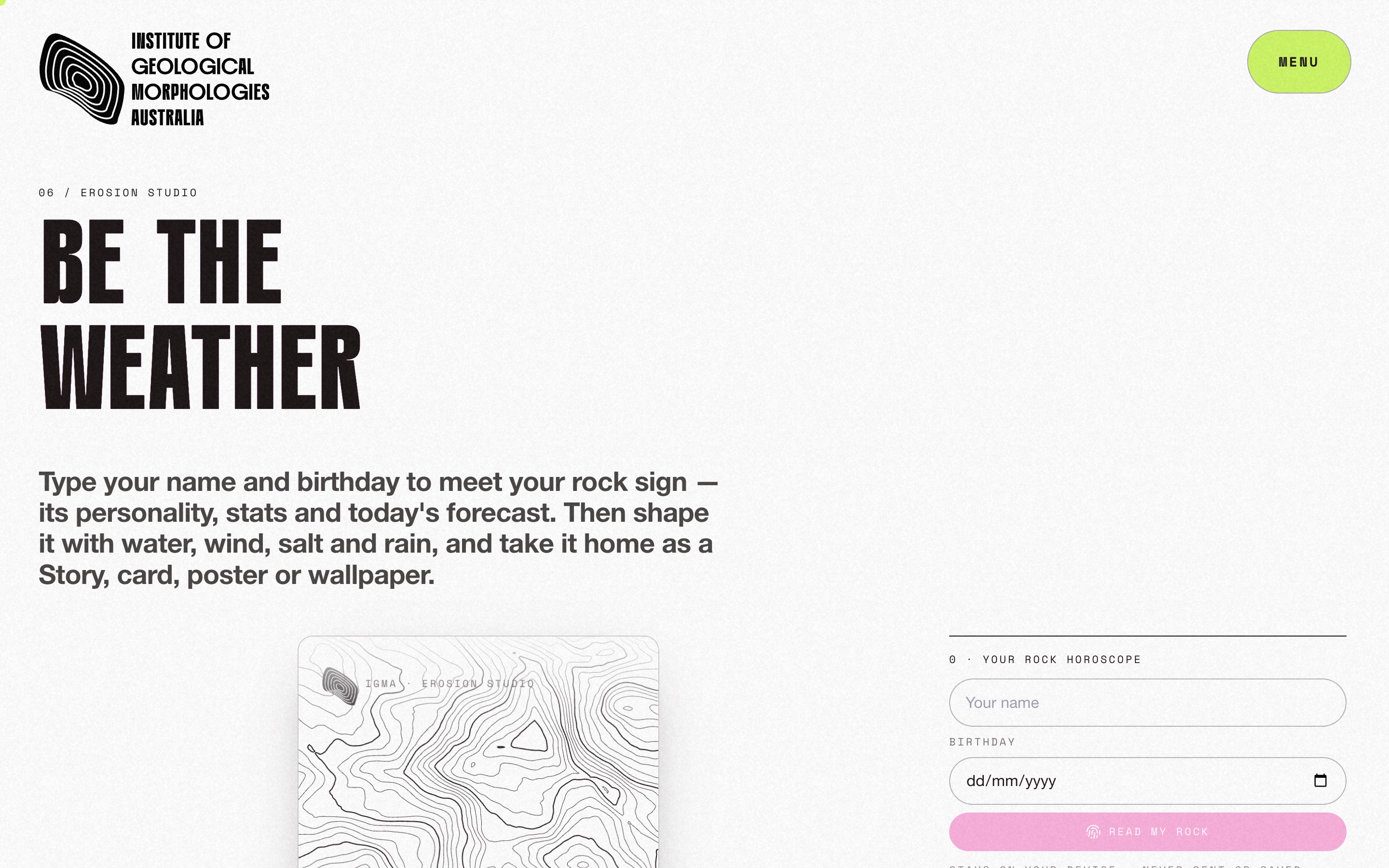
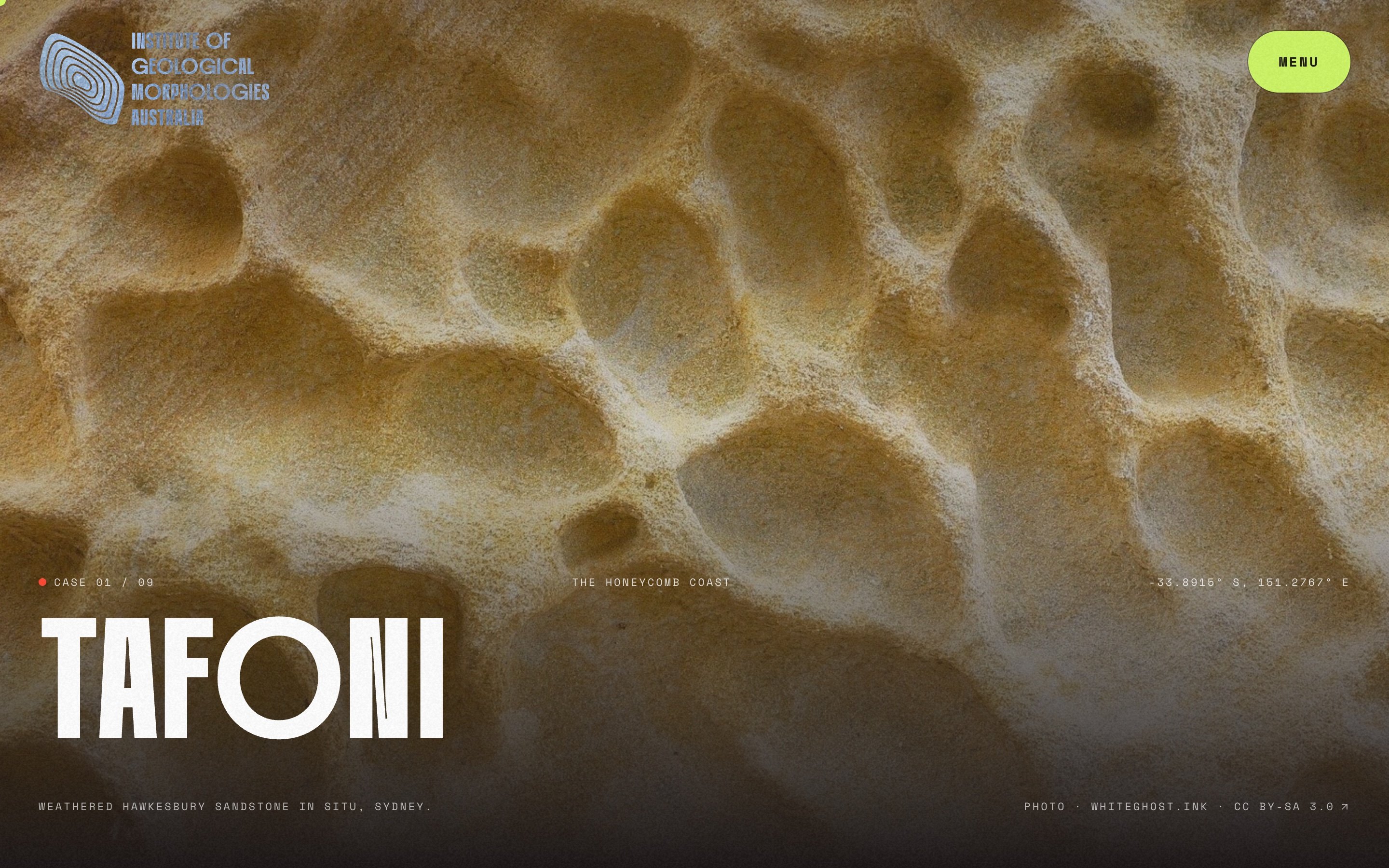
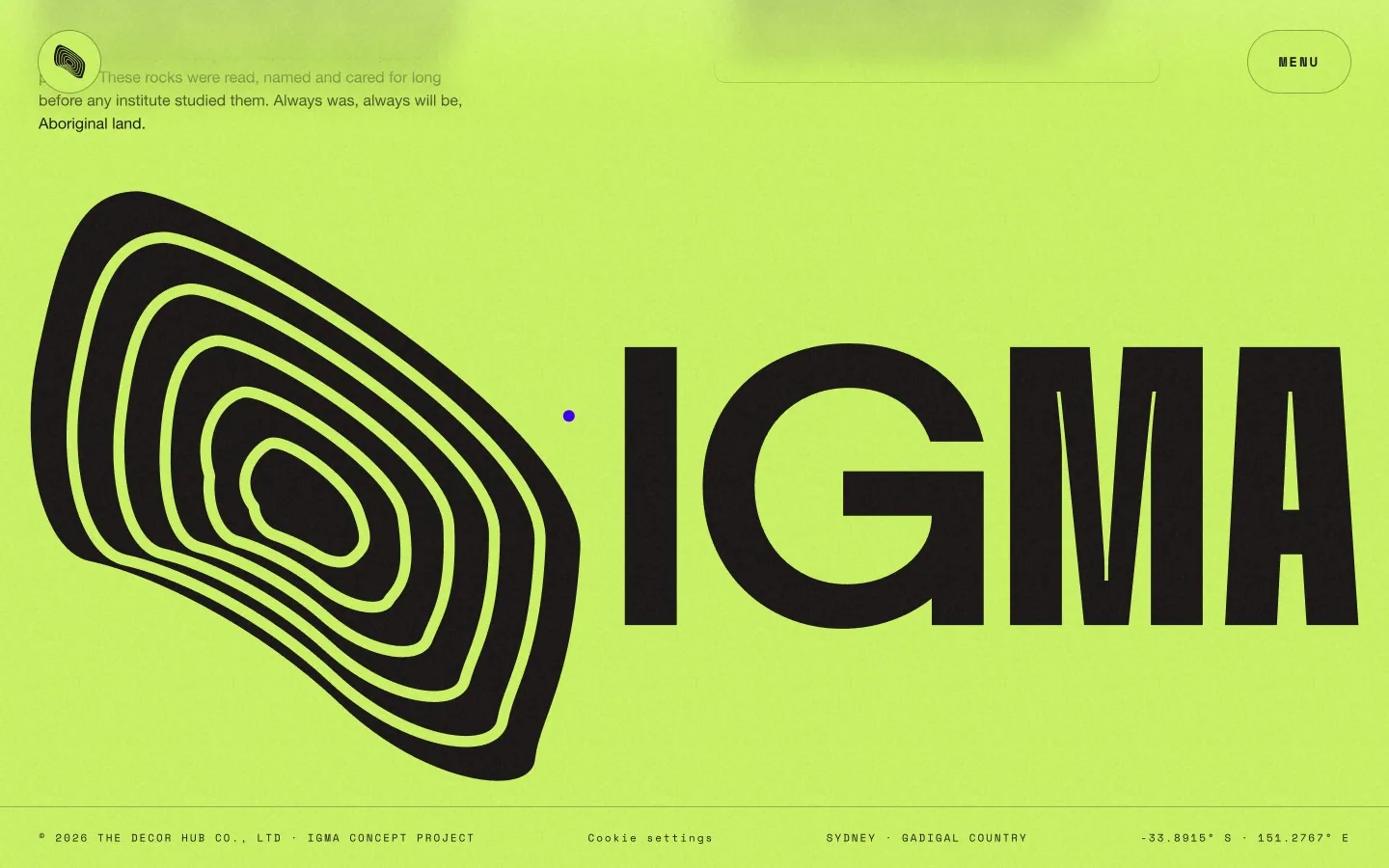
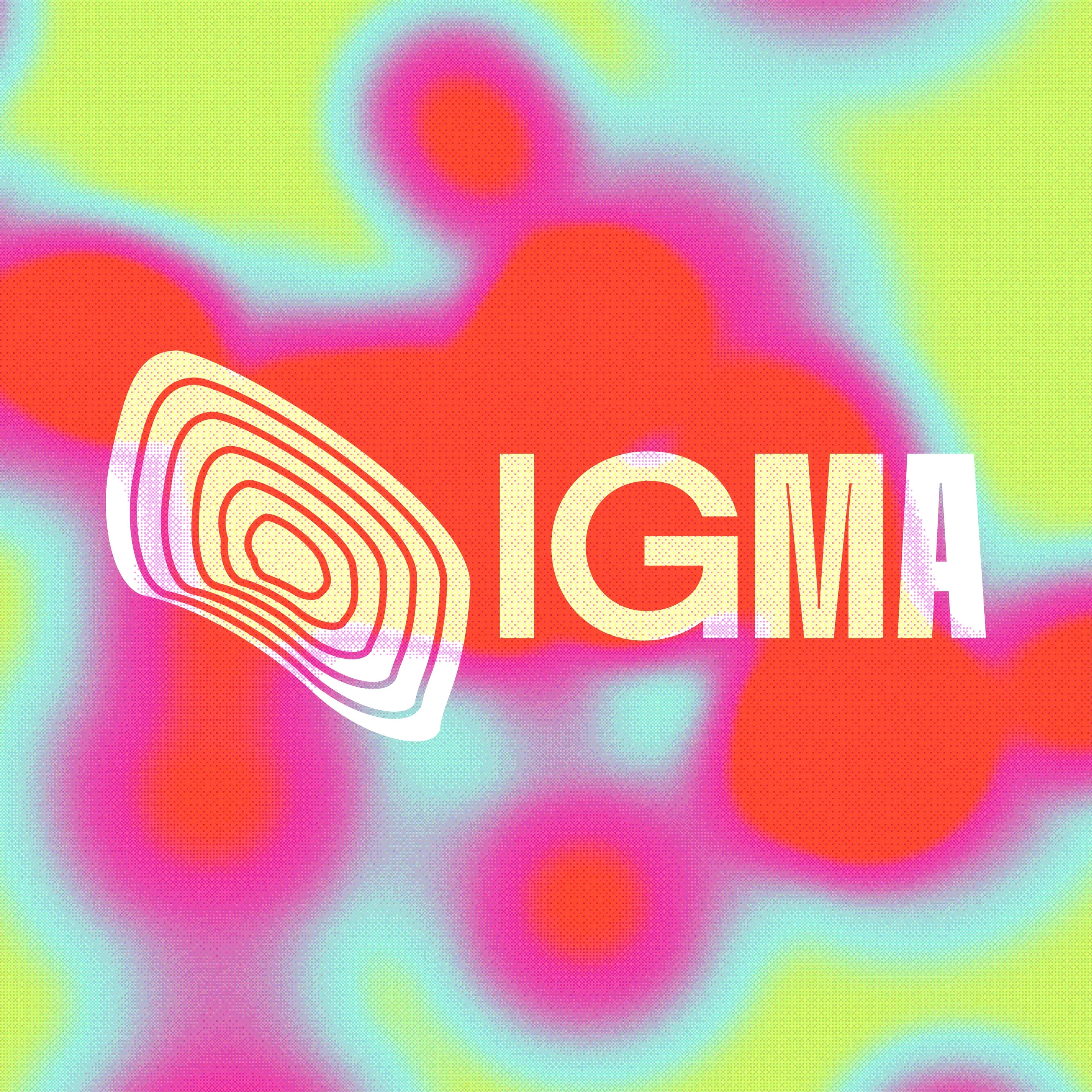
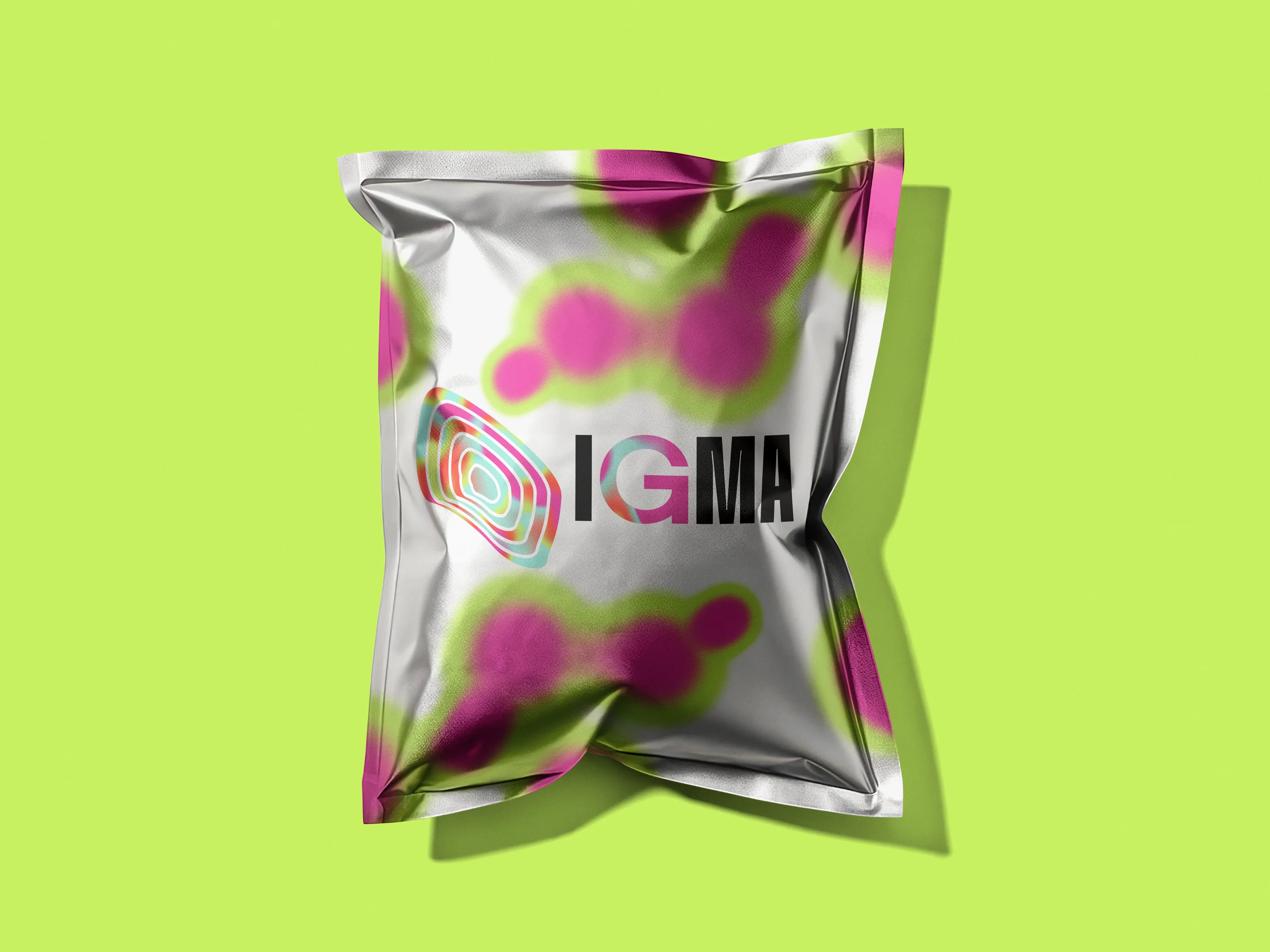
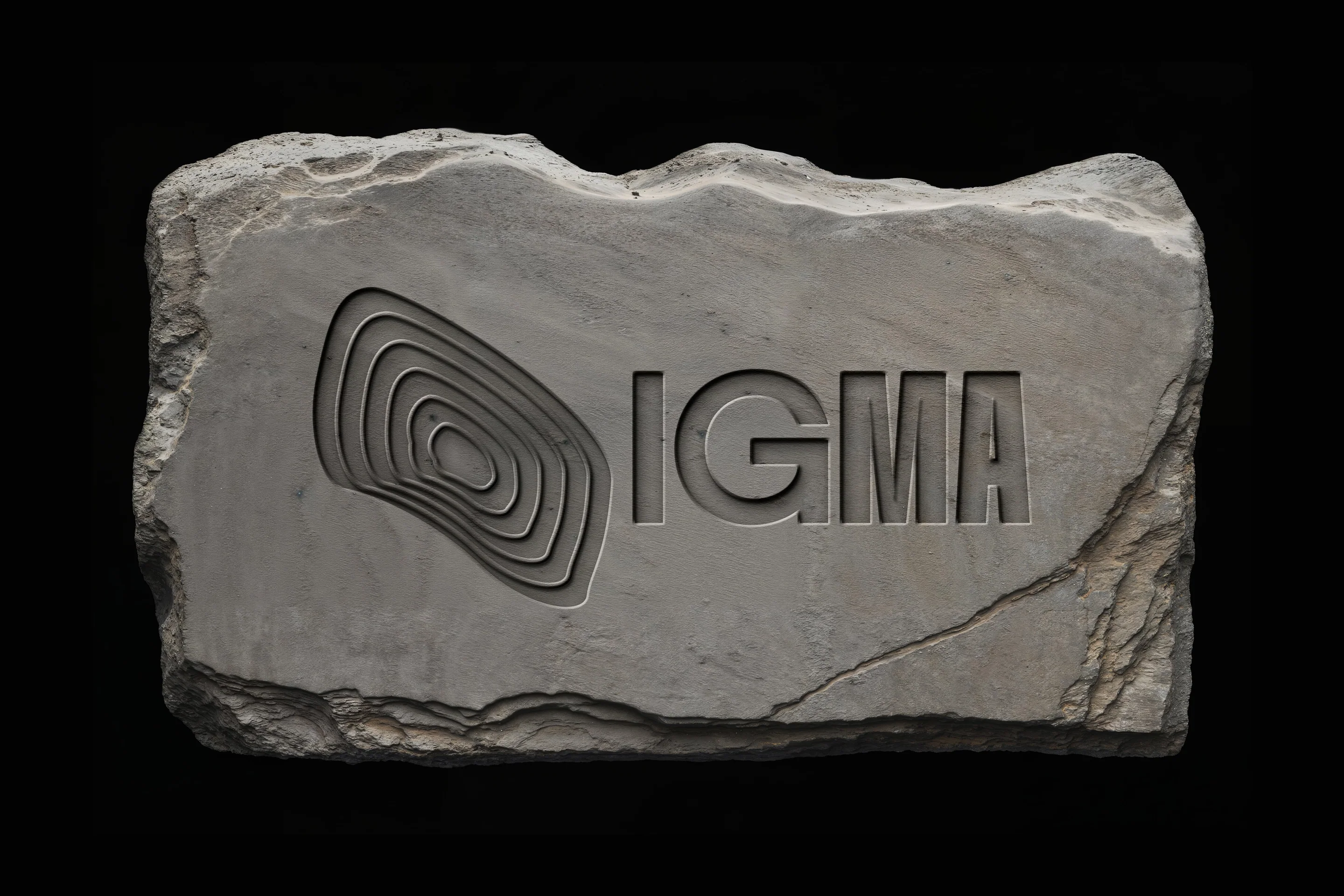
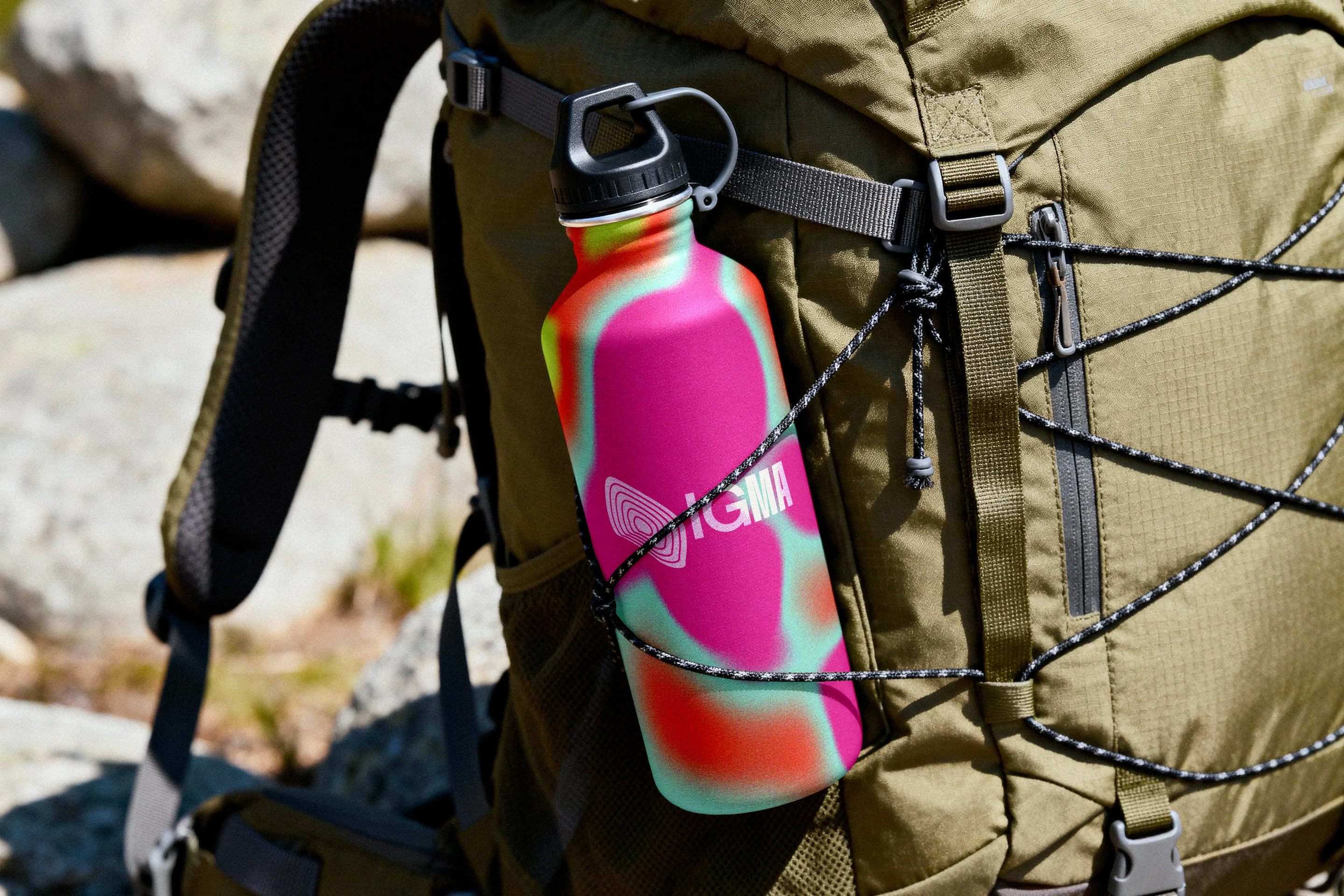
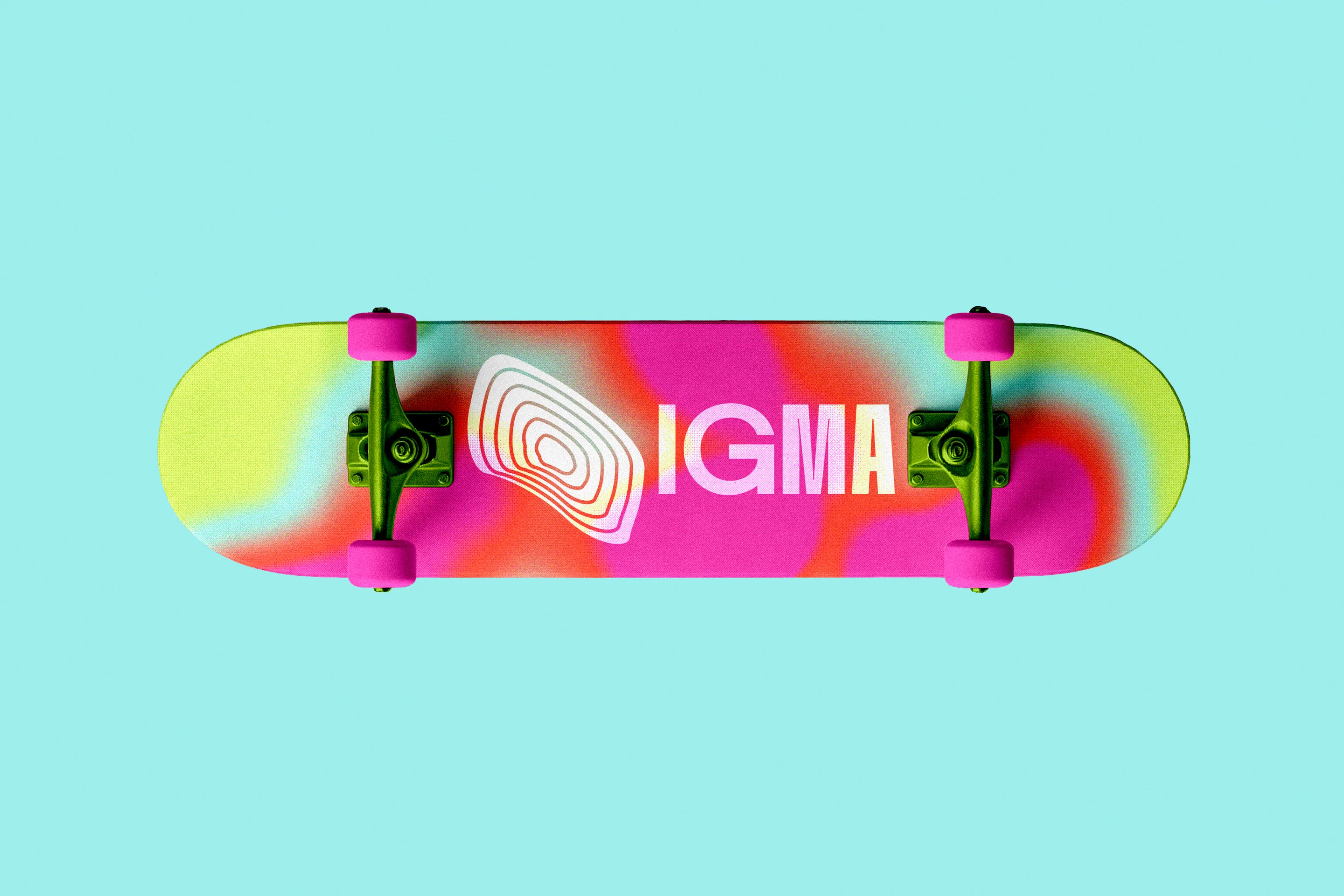
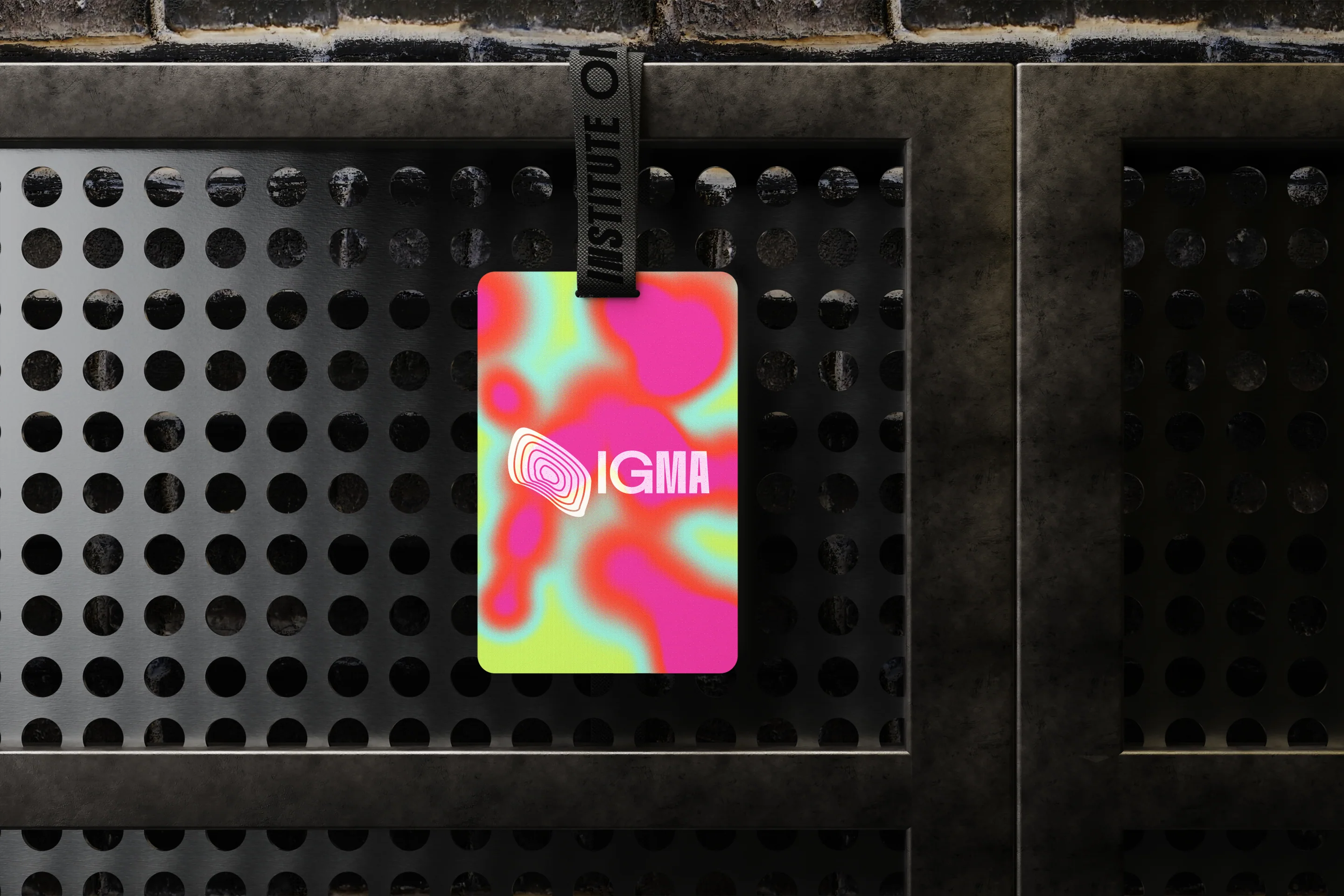
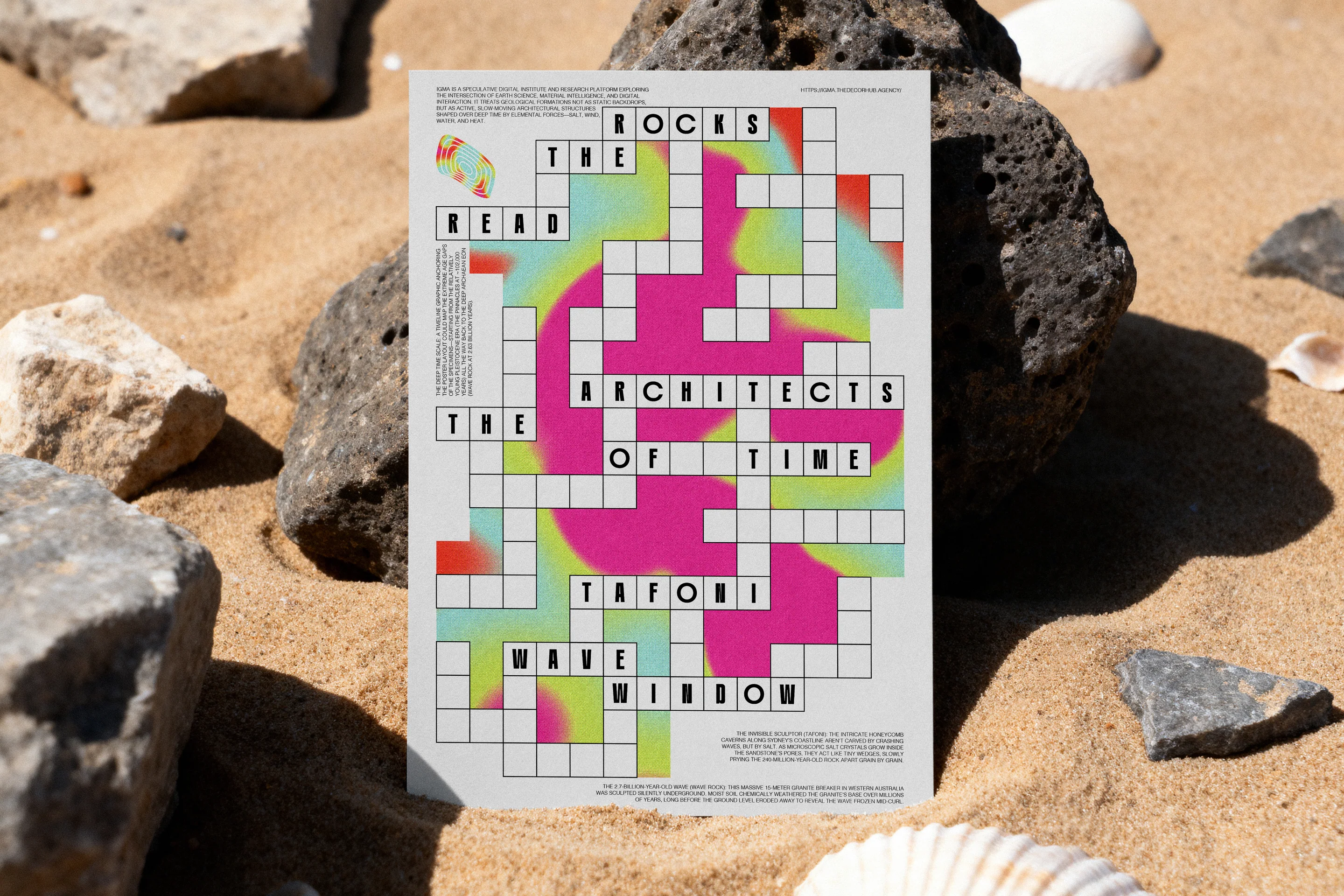
The mark is a section through one tafoni cavity: seven nested isolines, each a surface the rock once had, traced from photogrammetry and simplified into a signature. It is filled with a six-stop thermal gradient that never sits still — on screen it breathes, in print it is caught mid-weather. The wordmark is set in Chrones, a condensed display face, so the name reads like a label on a specimen drawer.







SELF-INITIATED PROJECT — INSTITUTE OF GEOLOGICAL MORPHOLOGIES AUSTRALIA (SPECULATIVE). DESIGNED AND BUILT BY THE DECOR HUB.™